vc.web.local

twitteryou tubeacpLinkedIn

Top Stories

Grid List

Medusa Africa set to boost Cameroon’s digital connectivity

Internet

Cameroon has completed a draft memorandum of understanding (MoU) for participation in the Medusa Africa submarine cable system, according to Business in Cameroon

The MoU has been submitted to the Presidency for “High Approval”, marking the first step toward the State’s formal commitment to the project

The country’s investment in the initiative is estimated at CFA32.8 billion (approx. US$58.5mn). Medusa Africa represents the West African branch of the broader Medusa system, led by AFR-IX Telecom Group, a Barcelona-based operator already present in Cameroon through a local subsidiary. Co-funded by the European Union, the cable is scheduled to become operational in 2028, linking Southern Europe to the Maghreb and Africa’s Atlantic coast, with planned landing points in Dakar, Abidjan, Accra, Lagos, Kribi, Libreville, Luanda, and Cape Town.

The European Commission has granted €14.3 million through the CEF Digital programme to support the project, while the U.S. Trade and Development Agency (USTDA) has provided approximately US$1.5mn for a feasibility study to extend the system into Africa.

Cameroon currently connects to five international submarine cables—SAIL, WACS (West Africa Cable System), SAT-3/WASC, NCSCS, and Ceiba-2—with Camtel as the sole operator owning and managing these systems. SAIL, NCSCS, and Ceiba-2 connect Cameroon to Brazil, Nigeria, and Equatorial Guinea, while WACS and SAT-3/WASC provide connectivity to Europe, North Africa, and Southern Africa. Ceiba-2 also links Cameroon to the ACE (Africa Coast to Europe) cable through Equatorial Guinea.

Despite this network, Camtel reportedly uses only 16% of the combined capacity of its submarine cables. Individual usage rates vary: 6% for SAIL, 57% for WACS, 29% for SAT-3, and 92% for NCSCS. Business in Cameroon notes that this underutilisation raises questions about the regional market’s capacity to absorb additional bandwidth and the operator’s commercial strategy.

Camtel attributes the low utilisation to limited Internet penetration in the sub-region, contrasting earlier projections of high bandwidth demand. Additionally, 83% of African Internet traffic is directed toward Europe, reducing the attractiveness of the SAIL cable. High pricing for capacity to Europe and South Africa via WACS, SAT-3, and NCSCS has further discouraged traffic routing through SAIL. The recent activation of Equiano and 2Africa cables, which have lowered regional capacity prices, has compounded the challenge.

Cameroon’s participation in Medusa Africa is expected to redirect traffic flows and may require reconfiguration of commercial offers to fully leverage existing assets. With 24 fiber pairs per segment and a capacity of 10–18 Tbit/s per pair, Medusa is designed as an open, independent system capable of supporting Cameroon’s digital growth for at least 25 years. For the country, it also provides a critical replacement for the aging SAT-3 cable, whose capacity limitations and maintenance costs have become increasingly burdensome.

The collaboration aims to deliver affordable, high-quality mobile connectivity to underserved and remote communities across Africa

Mobile

Vanu, Inc., a leading provider of mobile network infrastructure designed to help operators profitably serve rural areas, has entered a strategic partnership with Amazon’s low Earth orbit (LEO) satellite network, Project Kuiper

The collaboration aims to deliver affordable, high-quality mobile connectivity to underserved and remote communities across Africa, beginning with southern Africa.

Vanu’s mission centres on bridging the global digital divide by connecting those who remain unconnected. Its innovative coverage solutions already enable millions of people in isolated regions across multiple continents to access mobile networks

Through the integration of Amazon’s advanced satellite network into its portfolio, Vanu will strengthen its capacity to deliver reliable connectivity while partnering with a globally recognised technology leader.

Project Kuiper currently has over 150 satellites in orbit and continues to expand its growing constellation. Leveraging this infrastructure, Vanu plans to deploy its “Coverage as a Service” model, using Amazon’s low-latency backhaul connectivity to provide mobile broadband to rural populations starting in 2026.

By utilising satellite backhaul, Vanu can bypass the high costs and complexity of traditional telecom expansion, enabling access to high-speed communication for education, healthcare, commerce, and emergency response in remote communities.

“We are energized by this opportunity to accelerate our mission,” said Andrew Beard, CEO of Vanu. “Amazon’s low Earth orbit constellation gives us the scale, reliability, and performance to reach areas that have been technologically excluded for far too long. Together, we can reshape what is possible for rural connectivity worldwide.”

“Project Kuiper was created to help connect customers and communities beyond the reach of existing networks, and our backhaul solutions are an important part of that vision,” said Chris Weber, Vice President of Consumer and Enterprise for Project Kuiper. “Vanu has a proven track record connecting some of the hardest-to-reach places on the planet. Using satellite-based connectivity from Amazon, they can enable mobile network operators to reach more subscribers in more places.”

The partnership will begin in southern Africa, where Vanu and Amazon plan to showcase a sustainable and scalable framework for rural connectivity. By merging Vanu’s innovative terrestrial technology with Project Kuiper’s global satellite broadband capabilities, the collaboration aims to establish a replicable model for inclusive digital growth, setting the foundation for long-term global impact.

LEO services enhance AD Ports digital transformation. (Image source: AD Ports Group)

Satellite

AD Ports Group, a global leader in trade, logistics, and industrial services, has begun the deployment of Low Earth Orbit (LEO) satellite services across its worldwide fleet and terminal operations

This initiative represents a major advancement in the Group’s digital transformation strategy, designed to provide vessels with real-time data and ensure resilient, uninterrupted connectivity for ports and terminals. The move is expected to enhance efficiency and support fuel savings.

The rollout commenced this month following agreements signed with two leading global LEO satellite service providers.

Mohamed Jamal-Eddine, group chief information officer, AD Ports Group, said, “LEO satellite connectivity serves as the digital backbone that unlocks the full potential of our technology ecosystem. With high-speed, low-latency communications, we can deploy advanced AI applications for predictive maintenance, dynamic route optimisation, and automated cargo tracking in real-time. This is not just about faster connectivity; it's about creating a smart, resilient infrastructure that maintains business continuity even in the most remote areas. By integrating this connectivity with our IoT sensors, smart port platforms, and AI analytics, we are building a truly connected supply chain that provides unparalleled visibility and control to our customers and partners.”

The phased introduction has started on several vessels within the Group’s 270-ship fleet. With high-speed, low-latency communications, LEO services enable real-time vessel tracking, predictive maintenance, and dynamic route optimisation.

The satellite-enabled digital backbone will also drive AI-powered applications at sea, such as smarter voyage planning, fuel optimisation, and advanced safety monitoring, unlocking efficiencies previously restricted by limited connectivity.

At the port level, deployment is expanding to AD Ports Group’s network of 34 terminals across Europe, Africa, the Middle East, Central Asia, and Southwest Asia. The technology will deliver uninterrupted communications and operational continuity, particularly in remote regions and during critical activities. It will also bolster cargo monitoring, emergency response coordination, and service reliability.

This initiative aligns with AD Ports Group’s wider digitalisation programme, which includes smart port platforms, integrated supply chain systems, and Internet of Things (IoT) adoption. With LEO satellite connectivity serving as the foundation, these systems will now deliver richer, real-time insights and greater automation across the Group’s global operations.

Through the introduction of LEO satellite services, AD Ports Group underscores its commitment to driving digital innovation and sustainable growth in the global maritime sector. The Group intends to continue investing in advanced technologies and strategic alliances to deliver world-class solutions that benefit customers, partners, and stakeholders worldwide.

Mastercard expects artificial intelligence and agentic commerce to shape the next phase of Africa’s digital transformation.(Image credit: Mastercard)

Commerce

Mastercard has significantly strengthened Africa’s digital payments landscape, recording a 45 per cent expansion of its acceptance network across the continent in 2025. This milestone marks a major acceleration in digital commerce adoption, bringing millions of consumers and small businesses into Africa’s rapidly evolving digital economy.

The growth reflects a year of strong momentum driven by new market entries, increased investment, product innovation and deeper local engagement. Collectively, these efforts reinforce Mastercard’s ambition to help power Africa’s projected US$1.5 trillion digital payments opportunity by 2030—progress that would traditionally have taken several years to achieve.

Over the past two years, Mastercard has expanded its physical footprint by opening new offices in Ghana, Uganda and Mauritius, with additional African markets planned for 2026. At the same time, the company increased its workforce across the continent by nearly 20 per cent, strengthening local expertise and enabling the co-creation of solutions designed specifically for African consumers, merchants and institutions.

Alongside geographic expansion, Mastercard has invested heavily in critical digital infrastructure. Enhancements to tokenisation, digital identity solutions and virtual card capabilities have improved payment security, trust and convenience across both online and in-person transactions—key pillars for scaling inclusive digital economies.

Small and medium-sized enterprises (SMEs), widely regarded as the backbone of Africa’s economies, remain central to Mastercard’s strategy. With consumer spending forecast to rise in markets such as Kenya, Morocco, Nigeria and South Africa, demand for secure, efficient digital payment tools has surged. These tools enable SMEs to accept payments seamlessly, manage cash flow, access credit, and build resilience in an increasingly digital-first business environment.

Mastercard’s SME-focused portfolio includes tap-on-phone technology, the Mastercard Payment Gateway System for e-commerce, QR-based payment solutions, point-of-sale systems and business payment control tools that support virtual card issuance. In the past 18 months alone, the company has launched 15 new SME programmes through pan-African collaborations involving governments, telecom operators and FMCGs.

Beyond commerce, Mastercard continues to drive financial inclusion through initiatives such as Community Pass, a social enterprise platform connecting underserved and rural communities to essential services. The company aims to register 15 million African users on the platform within five years, building on its reach of 1.2 million smallholder farmers in Uganda.

Through the Mobilising Access to the Digital Economy (MADE) Alliance, Mastercard and its partners are also working to extend digital access to 100 million people and businesses by 2034, with early progress already underway in Kenya’s agricultural sector.

Mark Elliott, Division President, Africa, Mastercard, said, “2025 has been a defining year for Mastercard in Africa. From acceptance growth to new digital capabilities, our focus has been on solutions that bring people and small businesses into the heart of the digital economy. Our collaborations across Africa will continue to connect more people and businesses to the financial system, helping drive greater financial inclusion and economic opportunity, as we collectively look towards a US$1.5 trillion digital economy by 2030.”

Looking ahead, Mastercard expects artificial intelligence and agentic commerce to shape the next phase of Africa’s digital transformation, with the continent’s AI market forecast to reach US$16.5bn by 2030.

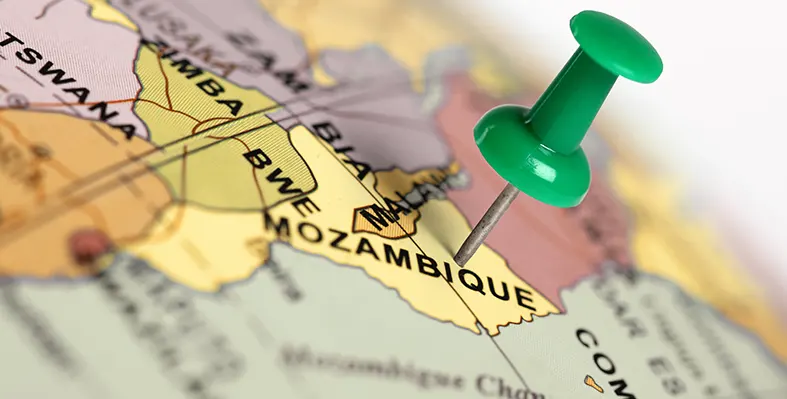
Mozambique’s energy sector to receive a boost from the African Development Bank following the institution’s participation in Maputo at the Africa50 summit

Power

Mozambique’s energy sector is to receive a boost from the African Development Bank (AfDB) following the institution’s participation in Maputo at the Africa50 shareholders meeting

Africa50 is an investment platform established by African governments with the AfDB, which has now surpassed US$1.4bn in managed assets directed at infrastructure provision.

At the 2025 summit, a memorandum of understanding was signed with Electricidade de Mozambique (EDM) for the development of three transmission lines under an Independent Power Transmission (IPT) framework.

“This will help support the government’s ambition to achieve universal electricity access by 2030 and become a significant exporter of power across the Southern African Development Community,” a statement released by AfDB noted.

Finalisation of the project development agreements is now underway for three lines under an IPT framework, partnering with Power Grid and EDM, it added.

A separate MoU was also signed with the Ministry of Communications and Digital Transformation to build a new data centre facility in Maputo and to modernise the existing one.

Africa50’s Mozambique portfolio already includes equity investment in the 175MW Central Termica de Ressano Garcia (CTRG) gas-fired power plant.

According to Dr Akinwumi Adesina, president of the AfDB Group, investments by Africa50 complement broader support from the bank itself that have delivered some US$1.6bn to Mozambique over the past decade.

This investment includes US$400mn in senior debt financing for the country's flagship US$20bn liquified natural gas (LNG) project in Cabo Delgado, as well as the US$34mn Mozambique Energy for All Project, which has connected more than 45,500 households to electricity.

The bank claims its energy sector investments have helped to double Mozambique's national energy access rate from 30% in 2018 to 60% in 2024.

The AfDB has also supported agricultural transformation through special agro-industrial processing zones, including the Pemba-Lichinga corridor, while financing critical transport infrastructure along the Nacala and Beira corridors that enhance regional trade connectivity for the African Continental Free Trade Area.

Earlier this year, the AfDB approved US$43.6mn in funding for the construction of the Namaacha-Boane transmission line and related electricity infrastructure

EDM will implement the project in partnership with Central Eléctrica da Namaacha (CEN), a private sector-led development group involving Globeleq Africa Limited and Source Energia that is building the 120 MW Namaacha wind farm in the southwestern part of the country. 

MultiChoice strengthens Africa’s digital ecosystem, protecting creative content and customer data through advanced cybersecurity solutions

Security

Cybersecurity has evolved from a technical necessity to a core pillar of trust, business continuity, and safe digital experiences

For MultiChoice, Africa’s leading video entertainment company, protecting both customer data and the creative works at the heart of its business is a top priority. In an increasingly connected environment, threats such as phishing, ransomware, and piracy continually evolve, posing risks not only to corporate systems but also to the creative content that drives Africa’s entertainment economy.

To address these challenges, MultiChoice invests heavily in advanced cybersecurity systems, global best practices, and strategic partnerships. The company’s dedicated cybersecurity and information security teams monitor digital threats around the clock, ensuring data integrity and maintaining a secure environment for millions of customers across the continent. These efforts demonstrate that cybersecurity is not just about defending networks; it is also about protecting intellectual property and the creative output that fuels Africa’s storytelling industry.

A major area of focus for MultiChoice is combating piracy, one of the most persistent threats to the sustainability of local content. Piracy undermines creators, producers, and investors by depriving them of rightful earnings. To tackle this, MultiChoice has partnered with global leader Irdeto, a specialist in digital platform cybersecurity. Together, they have developed cutting-edge anti-piracy technologies capable of detecting, disrupting, and removing illegal content distribution networks in real time.

Beyond technology, MultiChoice collaborates closely with law enforcement to bring perpetrators to justice. Several operations have successfully dismantled piracy syndicates, leading to arrests and reinforcing the company’s commitment to defending Africa’s creative economy. Through these measures, MultiChoice is setting a benchmark for content protection across the continent, safeguarding intellectual property while supporting the growth of local creative industries.

Cybersecurity Awareness Month serves as a timely reminder that protecting digital assets, whether personal data or creative content, is a shared responsibility. MultiChoice continues to champion this mission by fostering a culture of awareness, innovation, and collaboration. By integrating advanced cybersecurity technologies, partnering with global experts, and actively supporting law enforcement efforts, the company ensures that African creativity is both respected and secure.

MultiChoice’s ongoing initiatives, from monitoring threats to combating piracy, reflect a broader mission: “to create a secure, trusted, and sustainable digital ecosystem where African creativity can thrive.” In doing so, the company not only protects its platforms and customers but also empowers the continent’s creative industry, ensuring that local storytellers, producers, and innovators can flourish in a safe and resilient digital environment.